 Vietnamese
The country also aims to support at least 500,000 small and medium-sized enterprises in digital transformation, develop a minimum of five digital technology companies capable of competing with counterparts in advanced economies, and establish at least five operational data exchanges.
Deputy Prime Minister Ho Quoc Dung has signed a decision approving the Programme for Digital Economy and Digital Society Development for 2026-30, setting an ambitious target that digital economy accounts for around 30 per cent of Vietnam’s gross domestic product (GDP) by 2030.
The programme aims to build a dynamic digital economy powered by digital platforms, data and artificial intelligence, while gradually fostering new production models, driving innovation-led growth, improving labour productivity and promoting green and sustainable development.

The country also aims to support at least 500,000 small and medium-sized enterprises in digital transformation, develop a minimum of five digital technology companies capable of competing with counterparts in advanced economies, and establish at least five operational data exchanges.
The value of cashless transactions is targeted to reach 30 times higher GDP, while enrolment in science, technology, engineering and mathematics (STEM) disciplines is expected to account for 40 per cent of total higher education enrolment.
In terms of digital society development, the programme targets 100 per cent of households having access to fibre-optic broadband internet with speeds of up to 1 Gb/s.
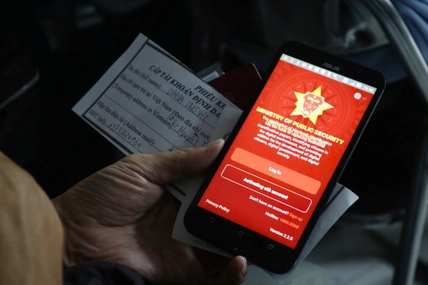
Fifth-generation (5G) mobile broadband services are expected to achieve minimum speeds of 100 Mb/s and cover 99 per cent of the population. The programme also aims for all Vietnamese citizens aged 14 and above to possess both an identity card and an electronic identification account.
By 2030, 95 per cent of people aged 15 and above are expected to hold accounts at banks or other authorised financial institutions, while more than 70 per cent of citizens aged 18 and above are targeted to have a digital or electronic signature.
In addition, at least 10 million working-age people are expected to receive training and capacity-building in basic digital skills during the 2026-30 period.
- (VNA/VLLF)