Vietnamese
The draft Maritime and Waterway Code proposes a unified legal framework for the maritime and waterway fields, with mechanisms to attract strategic investors and incentives for green transition.
The Ministry of Construction (MOC) has prepared the draft Vietnam Maritime and Waterway Code to replace the 2015 Vietnam Maritime Code and the 2004 Law on Inland Waterway Navigation.
With 318 articles arranged in 21 chapters, the draft aims to address overlaps in maritime and inland waterway management and increase links among seaports, inland waterway ports and berths, and inland clearance depots.
Infrastructure planning and investment
For the first time, the draft introduces a 100-year planning vision for maritime and inland waterway infrastructure. It proposes a mechanism to attract strategic investors in major projects involving seaport terminals, key inland waterway ports, the shipbuilding industry and logistics.
Investors wishing to implement priority projects would be selected through competitive bidding, based on their financial capacity, experience, technological capabilities and project implementation commitments. The Government would establish detailed selection criteria and mechanisms to monitor investors’ compliance with their commitments.
Under the draft, seaport terminal investment projects and their component projects would cease operating upon expiry of their operation duration without being extended. In case a seaport terminal remains consistent with the maritime infrastructure master plan, the investor would have to hand over to the State the assets belonging to the terminal’s infrastructure. If the terminal is no longer consistent with the master plan, the investor would have to dispose of the assets and restore the site in accordance with law.
The termination of projects and the disposal of their assets would not give rise to any obligation of the State to reimburse capital invested in terminal construction, renovation, upgrading or expansion.
Maritime industry and green transition
The draft devotes a separate chapter to the maritime industry, comprising the shipbuilding industry, maritime supporting industry and maritime technology industry. The shipbuilding industry would be the core field, alongside the development of domestic supply chains covering engineering, building, repair, materials, machinery and equipment.
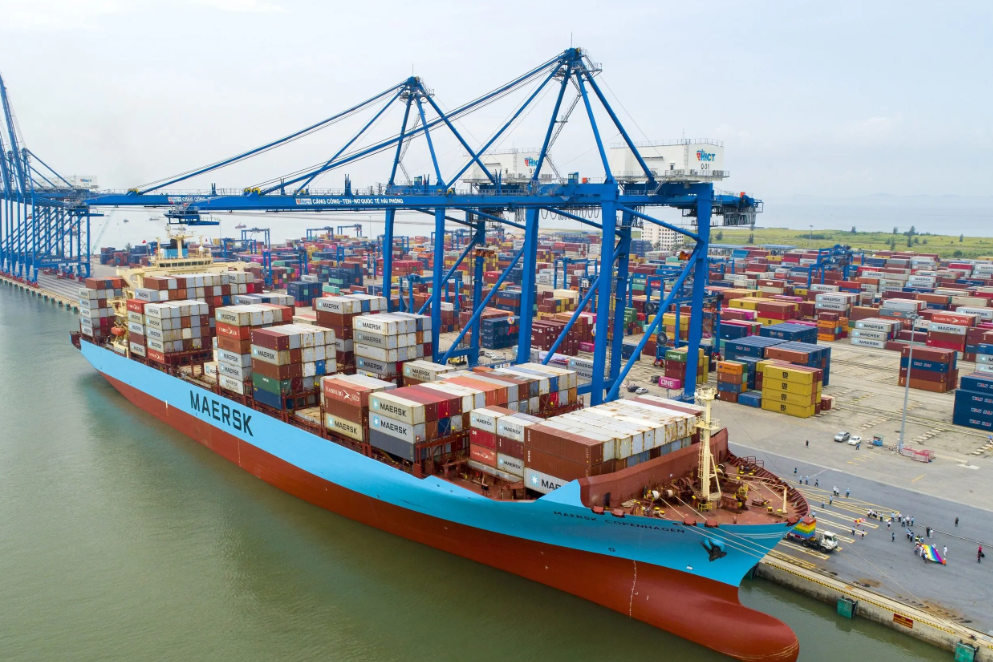
Noteworthily, organisations and individuals engaged in maritime and inland waterway activities would have to comply with environmental protection regulations, ensure energy conservation and efficiency, and proactively respond to climate change.
The transition to green energy, aimed at reducing greenhouse gas emissions, would be implemented in accordance with the designed roadmap, applicable laws and treaties to which Vietnam is a contracting party.
The draft also sets environmental protection requirements for seaports, waterway ports, inland landing stages, watercraft, and facilities engaged in the building, repair, conversion, recycling and dismantlement of watercraft.
Regarding administrative reform, the MOC envisages abolishing 54 administrative procedures and revising 46 once the code and implementing regulations are adopted. The draft would also delegate more tasks and powers to local authorities in performing the state management of inland waterways.
Management tasks would be supported by interconnected information systems and maritime and inland waterway databases. State agencies would not require providing data that are available or accessible through data connection and sharing.
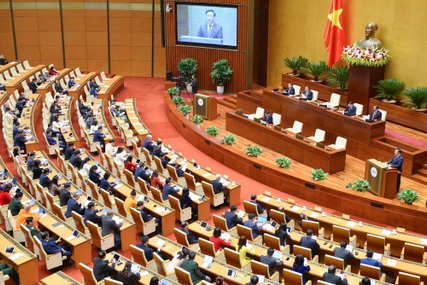
The draft is scheduled to be submitted for discussion during the ongoing session of the 16th National Assembly.
- (VLLF)