The Ministry of Health has proposed banning people born on or after January 1, 2010, from buying and using tobacco, in an ambitious move to protect young people from nicotine addiction and work towards a “smoke-free generation”.
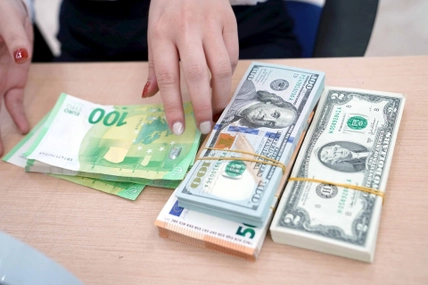
From July 1, Vietnam will impose heavy customs fines under a new government decree, on travelers who fail to declare or inaccurately declare cash, gold, precious metals or gemstones upon entry or exit.
The project aims to transform VNeID into a modern, secure and highly scalable national digital platform capable of effectively serving citizens, businesses, agencies and organisations in handling administrative procedures, accessing online public services, conducting electronic transactions and using digital utilities.
The Ministry of Health has proposed managing food safety throughout the supply chain, improving traceability and early risk prevention, and enhancing management under a single focal point mechanism from the central to local levels.
Spanning five chapters and 17 articles, the decree specifies eligible recipients, qualifying courses, selection criteria and principles, scholarship amounts and duration, authority for approval and disbursement, fund allocation and settlement, and the obligations of all entities and individuals involved.
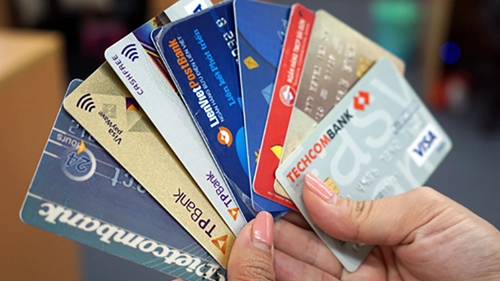
Under the national financial inclusion strategy for the 2026-2030 period, Vietnam aims for 95 per cent of the population aged 15 and above to have transaction accounts at banks or other authorised institutions by 2030.
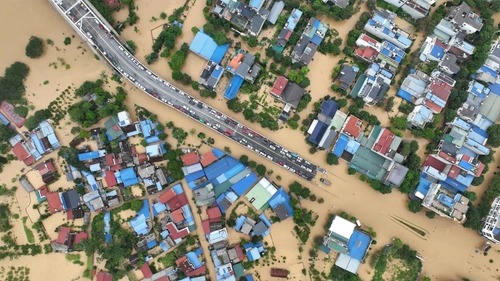
Under recently-issued Directive 23/CT-TTg on implementing Conclusion 213-KL/TW dated November 21, 2025 of the Party Central Committee’s Secretariat, provincial and municipal Party secretaries and chairpersons are required to take direct responsibility for disaster prevention and recovery work in their localities.
The Government has issued Decree 165/2026/ND-CP detailing and guiding the implementation of a number of provisions of the Law on Disease Prevention, including regulations on health quarantine for people entering, leaving and transiting through Vietnam.
AI-generated or AI-edited content must be clearly labelled to prevent users from mistaking it for real or authentic material, under a new Government decree.
Under a new circular, the exchange of greenhouse gas emission quotas and carbon credits is conducted on the domestic carbon credit exchange through the carbon trading system, which is interconnected with the national registration system.
Issued under Decision No. 23/2026/QD-TTg dated May 15, 2026, the list covers a wide range of technologies, including artificial intelligence (AI), big data and data analytics, cloud and edge computing, distributed and high-performance computing, Internet of Things (IoT), blockchain, quantum technology, renewable and clean energy, advanced energy storage, AI-powered real-time disaster forecasting and warning systems, and next-generation microbiology technologies.
The Government will adjust the basic salary after reporting to the National Assembly for consideration and decision, in line with the State budget’s capacity, the consumer price index and the country’s economic growth rate.
Citizens nationwide will receive free regular health check-ups or screening at least once a year and be provided with electronic health records for their lifetime health management, starting in 2026.
Looking ahead to 2035, Vietnam envisions becoming a comprehensive and sustainable digital nation where all transactions between citizens and government agencies are conducted online. National databases, with population data at the core, will be interconnected and efficiently utilised to support smart governance and real-time decision-making.
This is a new provision under Decree No. 144/2026/ND-CP amending and supplementing a number of articles of Decree No. 181/2025/ND-CP detailing the implementation of a number of articles of the Law on Value-Added Tax.
Official Dispatch No. 2272/BGDĐT-KHCNTT (2026) on guidelines for implementing the cooperation model among the State – educational institutions – enterprises, issued on April 29, 2026.
The Ministry of Science and Technology has proposed stricter penalties in the digital technology industry, with maximum fines of VND 200 million, in a bid to ensure a transparent and secure environment for the sector that plays a pivotal role in the nation’s digital transformation.
A series of measures to develop biotechnology into a key techno-economic sector will be intensively rolled out, with a view to significantly contributing to national development and defence.
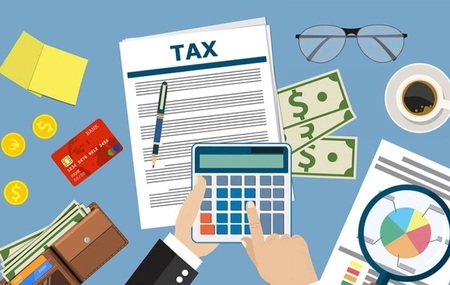
Under Decree 141/2026/ND-CP, the household businesses with annual revenue of VND 1 billion or less will not have to pay personal income tax and value-added tax.
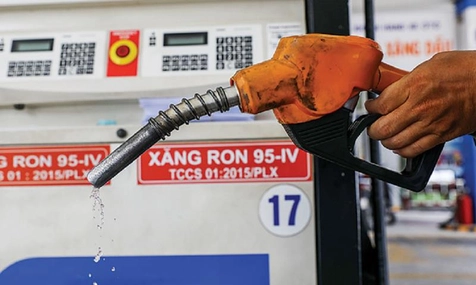
The Government issued Resolution 25/2026/NQ-CP on April 30, extending the application of Decree 72/2026/ND-CP, which reduces preferential import tariffs on several fuel products and inputs for fuel production.
The National AI Development Fund would be financed by the state budget with a total funding of VND 30 trillion, to be disbursed in multiple allocations
Regulations concerning project classification and the issuance of environmental permits are proposed to be amended to enhance clarity and transparency and reduce the range of entities required to carry out environment-related administrative procedures.
The directive calls on ministries, ministry-level agencies, and People’s Committees of centrally-run provinces and cities to organise a practical and effective emulation movement aligned with the Party and State’s orientations.
Effective as of April 16, Circular 17/2026/TT-BKHCN is expected to establish a comprehensive legal framework for science, technology and innovation development funds at all levels, providing a foundation for unified governance while maintaining proactiveness and flexibility in practice.
Under the Vietnam Research Excellence Fellowship Programme for the 2026-30 period, the State will provide a maximum support of VND 1 billion per year for every doctoral candidate for up to three years. When necessary, research assignments may be extended for two additional years with no further funding from the state budget.
A new decree is enacted to promote technology transfer and innovation through comprehensive incentives, reinforcing the country’s push toward an innovation-driven economy.
The Circular establishes a unified benchmark for foreign language proficiency across the national education system, providing a foundation for curriculum design, teaching, testing, assessment, and certification.
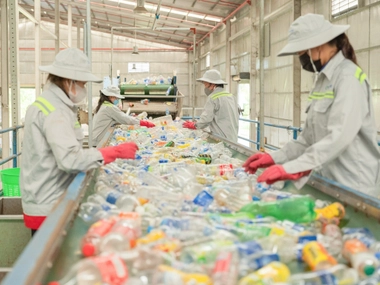
For batteries and accumulators, the compulsory recycling rates will be 12 per cent for lead-acid accumulators, 8 per cent for other types of accumulators and rechargeable batteries while the rate for lithium and nickel-metal hydride batteries for motor vehicles is zero per cent.
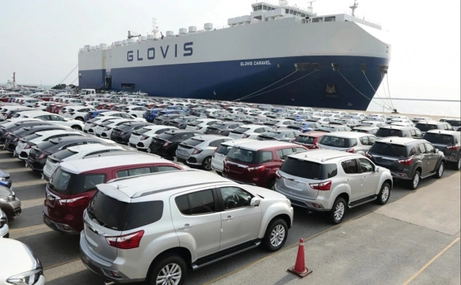
The Government has issued Decree No. 117/2026/ND-CP amending and supplementing a number of articles of Decree No. 116/2017/ND-CP dated October 17, 2017 of the Government providing for conditions for manufacturing, assembly, import and warranty and maintenance services of automobiles, which takes effect on April 3, 2026.
The Minister of Finance has issued Circular No. 40/2026/TT-BTC providing for exemption of certain fees and charges to support production and business in the transport sector, which takes effect from April 7, 2026.
Resolution No. 19/2026/QH16, adopted by the XVIth National Assembly at its 1st session on April 12, 2026, provides regulations on taxes applicable to gasoline, oil and aviation fuel during the period from April 16, 2026, through June 30, 2026.
The Ministry of Justice has proposed that adoptive parents be at least 20 years older but no more than 45 years older than the adopted person, in a bid to ensure a safe, stable and humane environment for adopted persons, especially children.
By 2030 all identified victims of gender-based violence are expected to access at least one appropriate support service, according to Decision 625/QD-TTg signed by Deputy Prime Minister Pham Thi Thanh Tra on April 6.
The Government has recently released Decree 86/2026/ND-CP, introducing new requirements and procedures for the operation of prize-winning video games for foreigners.
The electronic identity database and the national artificial intelligence database are among 20 key databases on the newly promulgated List of national databases.
Vietnam has approved an action programme to implement the ASEAN Economic Community (AEC) Strategic Plan, aiming to deepen regional integration and enhance the country’s role within ASEAN.
The Government has issued Resolution 86/NQ-CP promulgating the national strategy on innovative start-ups, aiming to foster a wave of innovation-driven entrepreneurship across society, grounded in science, technology and digital transformation.
Vietnam plans State-budget advances to its fuel price stabilisation fund, aiming to cushion domestic fuel price swings amid global market volatility and rising energy costs.
The proposal appears in appraisal documents for a draft National Assembly resolution on breakthrough mechanisms and policies for cultural development, published by the Ministry of Justice. The draft, prepared by the Ministry of Culture, Sports and Tourism, is expected to be submitted to lawmakers for consideration.
The National Institute of Digital Technology and Digital Transformation is currently consulting relevant units under the Ministry of Science and Technology to draw up a list of high-risk artificial intelligence systems.
The Minister of Finance has issued Circular No. 28/2026/TT-BTC prescribing the rates, collection, remittance, and management of charges and fees in the fields of exit, entry, transit, and residence in Vietnam, which takes effect from April 1, 2026.
The Prime Minister has signed Decision 530/QD-TTg approving a national programme to attract foreign experts and overseas Vietnamese (OV) scholars to teach, conduct research and work at Vietnam’s higher education and vocational training institutions.
The Government’s Decree No. 86/2026/ND-CP dated March 27, 2026, amending and supplementing a number of articles of the Government’s Decree No. 121/2021/ND-CP on the business of prize-winning electronic games for foreigners, has been promulgated.
Under the circular, individual investors, regardless of residency status, who transfer crypto assets through service providers must pay personal income tax at a rate of 0.1 per cent of the value of each transaction.

 Vietnamese