 Vietnamese
With Resolution 10-NQ/TW, issued on June 8, 2026, Vietnam is moving from broad-based foreign investment attraction to a more selective strategy that prioritises high-quality capital, advanced technology, sustainability and stronger links between foreign investors and domestic enterprises.
“Vietnam will not seek investment at any cost, but must be a country with a clear strategy, selective priorities and the capacity to screen investors and work alongside high-quality investors to create new value together.”
Party General Secretary and President To Lam made the statement at a national conference in Hanoi on June 30 to disseminate and implement Politburo’s Resolution 10-NQ/TW on the development of the foreign-invested economic sector.
“Vietnam welcomes foreign investors who are committed to doing long-term business in the country, complying with the law, respecting the legitimate interests of workers, local communities and the nation, sharing technology, training human resources, developing domestic enterprises, and helping enhance Vietnam’s position in the global value chain,” the top leader stressed.
Foreign investment, he noted, is not meant to replace Vietnam’s domestic strengths, but to reinforce them and bolster the country’s self-reliance. Nor is it intended merely to pursue faster growth, but to support sustainable, inclusive and high-quality development.
This is also the central message of the Resolution, which signals a significant shift in Vietnam’s foreign investment policy as the country enters a new stage of national development: moving from attracting large volumes of capital to selecting higher-quality flows that bring advanced technology, skilled human resources, green and digital growth, and stronger links with domestic enterprises.
Moving from quantity to quality
According to the Resolution, after nearly 40 years of doi moi (renewal) and market opening, foreign investment has become an important part of Vietnam’s development.
The foreign-invested sector has provided additional investment resources, supported economic restructuring, expanded export markets and helped the country participate more deeply in regional and global production networks.
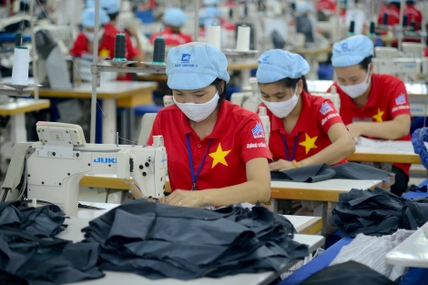
However, the quality and efficiency of attracting, managing and using foreign investment have yet to match Vietnam’s potential and expectations. Labour-, resource-, land- and energy-intensive projects as well as processing and assembly projects still account for a large proportion of foreign investment. Localisation rates and domestic added-value remain low, while linkages with Vietnamese enterprises and technology transfer remain limited. In some localities, competition for foreign investment still focuses mainly on project numbers and registered capital.
The Resolution now signals a shift in mindset. Vietnam no longer views foreign investment merely as an external source of capital, but as part of its broader strategy for industrialisation, modernisation, rapid and sustainable growth, political stability, national defence and security, and stronger national standing. The country also affirms the protection of intellectual property rights, property ownership rights, investment capital, income and other lawful rights and interests of foreign investors.
Under this approach, investment attraction will move away from a model driven largely by administrative boundaries and local competition. Instead, Vietnam aims to attract foreign investment through industrial clusters, value chains and innovation ecosystems, forming interconnected centres of production, services, technology and innovation.
The Resolution also sets quality, efficiency, technology transfer, supply-chain participation and added value as key criteria for assessing foreign investment. Investment incentives are expected to shift gradually from input-based preferences to support linked to the fulfilment of commitments. A project will, therefore, no longer be assessed mainly by its registered capital, land use or initial number of workers, but by whether it brings technology, skills, domestic linkages and real economic efficiency.
The Resolution confirms that Vietnam is setting higher expectations for foreign capital flows than ever before. Once these orientations are institutionalised through laws, sub-law documents and policies, Vietnam’s foreign-invested sector is expected to undergo a significant shift.
Ambitious targets
Under the Resolution, Vietnam aims by 2030 to become one of ASEAN’s leading countries in terms of business investment environment, competitiveness, innovation, public service quality and capacity to receive high-quality foreign investment projects.
During the 2026-30 period, the country expects to attract USD 200-300 billion in registered foreign investment, equivalent to USD 40-50 billion a year. Disbursed capital is projected at USD 150-200 billion, or USD 30-40 billion annually.
Vietnam also targets having 75 per cent of foreign investment capital come from developed economies with strengths in technology, capital and modern governance. It seeks to attract multinational corporations to invest in research, design, innovation, data, regional headquarters, operation centres, treasury centres, procurement centres and shared service centres. The number of Fortune 500 companies with investment projects in Vietnam is expected to increase by 30 per cent.
Another notable target is to have at least three of the world’s leading technology corporations establish headquarters, offices or research and development centres in Vietnam. However, the Resolution does not focus only on large corporations. It also encourages foreign enterprises, including small- and medium-sized enterprises, to invest in Vietnam if they possess core or specialised technology and the capacity to participate deeply in global value chains.
As for domestic linkages, the average localisation rate in key industries is expected to reach 45-50 per cent by 2030, while about 10,000 domestic enterprises are expected to join the value chains and supply chains of foreign-invested enterprises, including about 500-1,000 tier-1 suppliers. In human resources, trained workers are targeted to account for about 80 per cent of the workforce.
By 2045, Vietnam wants the foreign-invested economic sector to develop effectively and sustainably, with close links to the State and the private economy. The sector is expected to account for about 25 per cent of total social investment capital and contribute around 30 per cent of GDP, supporting Vietnam’s goal of becoming a developed, high-income country.
Solutions
Developing human resources and infrastructure
Recognising that hi-tech investment cannot rely only on tax incentives or low labour costs, the Resolution gives substantial attention to the development of high-quality human resources. Vietnam will develop human resource programmes linked to the needs of priority sectors, industrial clusters, industrial parks, hi-tech parks and strategic projects. Closer cooperation among the State, training institutions, domestic enterprises and foreign investors is considered essential.
Policies will also be improved to attract foreign talents, experts, scientists, entrepreneurs, founders, overseas Vietnamese and highly qualified foreigners to work, conduct research and innovation activities, start businesses and manage operations in Vietnam. Current work permit requirements will be reviewed and simplified to make it easier for foreign experts to work in the country, especially hi-tech experts and those working on a short-term basis.
Infrastructure is another indispensable condition for attracting strategic investment. Vietnam plans to develop a coordinated and modern infrastructure system aligned with national, regional and local master plans, with priority given to hub seaports, international airports, expressways, high-speed railways, inland waterways, logistics centres and dynamic growth regions. Sufficient and stable supplies of electricity and water, digital infrastructure, cleared land areas and support services for high-quality projects will also be ensured.
The transformation of industrial parks, economic zones and hi-tech parks into ecological, smart and specialised models is also encouraged. Production infrastructure is expected to be connected with logistics facilities and social infrastructure for workers, including housing, healthcare, education, culture and sports.

Prioritising high technology, green and digital investment
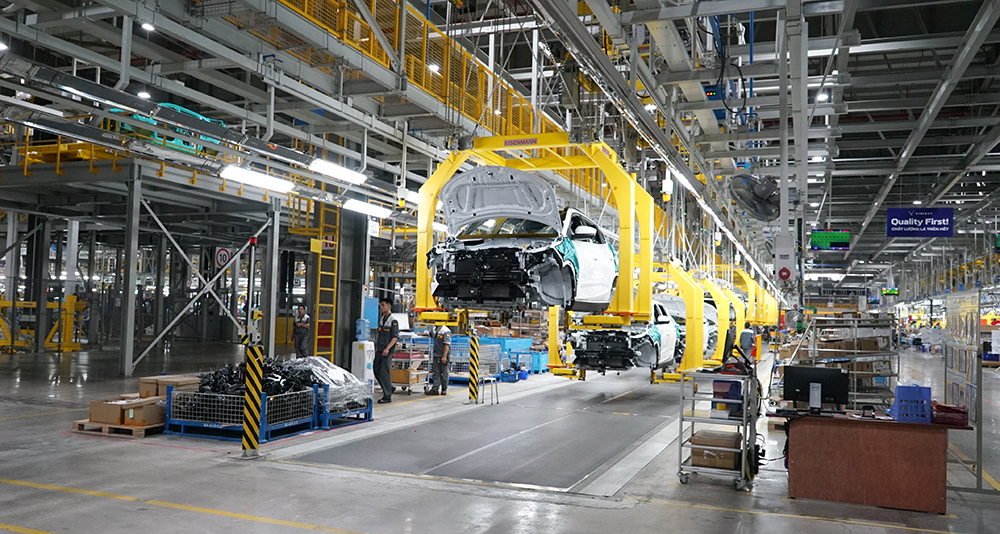
The Resolution defines priority areas for attracting foreign investment in relatively clear terms. Vietnam will focus on electronics, semiconductor chips and digital equipment; artificial intelligence, big data, cloud computing, the Internet of Things and blockchain; advanced biotechnology and biomedicine; energy technology, advanced materials and green industry; modern logistics, supply chain services, finance, trade, innovation and other high value-added services.
Foreign-invested enterprises will be encouraged, and in some cases required, to make commitments on technology, research and development, technology transfer, training for Vietnamese workers, domestic added value, local supplier development, green transformation and digital transformation. A national programme for developing domestic suppliers will also be established, together with a national database, a supplier-connection platform, industrial clusters and mechanisms for long-term cooperation between foreign investors and Vietnamese enterprises.
Expanding capital markets and indirect investment
Rather than focusing only on foreign direct investment in factories, service centres and production facilities, the Resolution also attaches importance to foreign indirect investment, capital contributions, share purchases, mergers and acquisitions, investment funds, financial institutions and capital markets. This reflects a move from a project-based investment attraction model to an ecosystem-based approach that supports long-term capital mobilisation.
Vietnam aims to develop medium- and long-term capital markets in a transparent, modern, safe and sustainable manner, reducing dependence on short-term credit. The Resolution sets the target of having Vietnam’s stock market upgraded before 2030 by the Morgan Stanley Capital International (MSCI). For international investors, such an upgrading could improve access to institutional capital flows, raise transparency standards and bring Vietnam to the attention of more global investment funds.
At the same time, Vietnam will remain cautious about financial and market risks. The Resolution calls for stronger supervision of capital flows, foreign exchange, anti-money laundering and systemic risks. The controlled pilot development of cryptoasset exchanges should therefore be understood as experimentation within a riskmanagement framework, not as an unrestricted opening for all cryptoasset activities.
Improving services while tightening risk control
The Resolution calls for investment promotion to be renewed in a more proactive, focused, data-driven, professional, substantive and long-term manner. Rather than promoting investment indiscriminately, Vietnam will prioritise identifying, approaching, negotiating with and supporting strategic investors and strategic projects throughout the investment process. Post-licensing support, the prompt removal of obstacles facing existing projects and the expansion of high-quality projects are also identified as key elements of a more effective investment attraction policy.
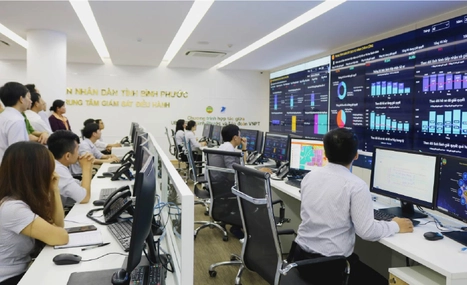
A notable measure is the planned development of a national single-window investment portal, with end-to-end digitalisation and data interconnection among ministries, sectors and localities. Under this system, investors would submit information only once, them data could be shared and reused by relevant authorities. If effectively implemented, the portal could significantly reduce administrative procedures, shorten processing time, lower compliance costs and improve the quality of public services for investors.
Alongside better services, Vietnam also seeks stronger risk governance. The Resolution requires tighter prevention and control of transfer pricing, trade fraud and origin fraud, as well as closer verification of capital origins, ultimate beneficial owners and high-risk transactions. Investors will also be monitored more closely in the implementation of their commitments. Projects that fail to fulfil commitments, use land, resources or energy wastefully, or have negative impacts on the environment, public order or social safety may face sanctions or have incentives withdrawn.
Conclusion
For foreign investors, Resolution 10-NQ/TW sends a clear message: Vietnam remains open to foreign capital, but with higher expectations.
Investment projects involving advanced technology, green transition and digital transformation, research and development, skilled workforce training, domestic supplier development and strong compliance will be better aligned with the country’s new policy direction. Projects that rely mainly on cheap labour, consume substantial resources or create low added value may receive less priority.
In essence, Vietnam wants foreign investment to contribute more directly to domestic capacity, supply-chain resilience and long-term growth. The country no longer aims to be merely a low-cost manufacturing base, but a destination for higher-value production, innovation and strategic investment.
- (VLLF)