In line with Politburo Resolution 57 on breakthroughs in the development of science, technology, innovation and national digital transformation, the 2025 High Technology Law establishes a transparent, stable and favourable legal framework for investment, production and business activities in the fields of high technologies and strategic technologies.
The Minister of Finance has issued Circular No. 40/2026/TT-BTC providing for exemption of certain fees and charges to support production and business in the transport sector. The following are key highlights of Circular No. 40/2026/TT-BTC.
Outward investment from Vietnam has a specific nature, directly impacting national financial security, foreign exchange reserves, and macroeconomic development orientation. To ensure consistency and compatibility with the new provisions of the current Law on Investment
Contrary to common perception, market access in Vietnam for foreign investors is not entirely unrestricted. In practice, the ability to invest in a particular sector depends on multiple factors, including the scope of market liberalization, foreign ownership limitations, and applicable business conditions in each industry.
Equitization of enterprises is one of the forms of restructuring State capital in enterprises. Below are the key new points of Decree 57/2026/ND-CP on enterprise equitization effective from February 13, 2026.
In the context of accelerated digital transformation and international integration for sustainable development, the revised Law on Technology Transfer is expected to create a fresh momentum for enterprises to improve their technological capabilities and competitiveness, thereby contributing to the development of a modern, transparent and efficient technology market.
In cross-border commerce and international investment, the terms "dispute involving foreign element" and "international dispute" are frequently used interchangeably — often incorrectly.
In addition to offshore lending activities, notable new points of Circular No. 79/2025/TT-NHNN on foreign debt recovery by credit institutions and foreign bank branches, effective from December 31, 2025, are summarized below:
The deadline for enterprise income tax finalization is an important milestone that every enterprise should pay special attention to after the end of a fiscal year. Late submission of tax finalization dossiers or underpayment of payable tax amounts will not only incur late payment interest but may also result in administrative penalties for tax violations.
From March 2026, a series of new decrees and circulars will introduce electronic identification codes for real estate, strengthen transparency requirements for charitable funds, tighten administrative sanctions, and impose stricter compliance obligations in the banking sector.
Being one of the first countries in the world to enact a specialised law on artificial intelligence, Vietnam affirms its determination to establish a unified legal framework for the development, application and governance of artificial intelligence in order to protect human beings, promote innovation, and build a self-reliant, secure and human-centred digital future.
As the global economy transitions towards a knowledge-based model, science, technology and innovation have become decisive engines of national growth. In Vietnam, the 2025 Law on Science, Technology and Innovation is widely viewed as a strategic institutional framework for improving national competitiveness while raising the country’s position in global value chains.
The State Bank of Vietnam has issued Circular No. 55/2025/TT-NHNN prescribing the licensing of non-bank credit institutions. Below are the major changes of Circular No. 55/2025/TT-NHNN to clarify the applicable regulations as of 09 February 2026.
The State Bank of Vietnam has issued a Circular amending and supplementing regulations on required reserves applicable to credit institutions and foreign bank branches. Below are the major changes introduced by Circular No. 23/2025/TT-NHNN regarding banks’ required reserves.
In the course of operation, commercial banks must comply with various regulations on the number and establishment of transaction offices. Under current law, how many transaction offices may a commercial bank establish? The article below provides detailed information.
The State Bank of Vietnam (SBV) will tighten Online Banking security requirements starting March 1, 2026. What are the key new regulations? Below are the major changes introduced under Circular No. 77/2025/TT-NHNN.
The State Bank of Vietnam has promulgated a document providing guidance on the listing of stocks on foreign securities markets by credit institutions, which takes effect from January 29, 2026. Below are the major changes of Circular No. 47/2025/TT-NHNN.
To list stocks on foreign securities markets, joint-stock credit institutions must obtain approval from the State Bank of Vietnam. Below are the procedures for obtaining approval for listing stocks on foreign securities markets, in accordance with Circular No. 47/2025/TT-NHNN, which takes effect on January 29, 2026.
The establishment of the International Financial Center necessitates an appropriate judicial institution capable of resolving cross-border investment and business disputes. In this context, the Law on Specialized Court at the International Financial Center was enacted as a key legal foundation for the application of a professional adjudicatory mechanism, thereby enhancing Vietnam’s profile and competitiveness in the international arena.
Every year on November 20, Vietnam honors teachers for their dedication to the noble cause of education. This year, the celebration is especially meaningful as the National Assembly has adopted the Law on Teachers, a major step forward in honoring and developing the contigent of teachers, and improving education quality nationwide.
At the exhibition of the 2025 Law Day Celebration organized by the Ministry of Justice on November 7, 2025, the Chairman of the National Assembly, Mr. Tran Thanh Man, directly interacted with the Law AI system operated and developed by LuatVietnam.vn on the National Law Portal.
In recent years, along with the strong growth of the economy and the increasing demand for loans, credit activities in Vietnam have expanded both in scale and scope. However, accompanying this development is the reality that disputes over credit contracts have become increasingly common, not only rising sharply in number but also becoming more complex in nature and extent.
As Vietnam accelerates the transition to clean energy models, the revised Atomic Energy Law stands out as a statutory imperative to facilitate the safe and sustainable development of nuclear power for peaceful purposes.
Vietnam is shaping strategic steps to become a destination for global capital flows, most notably with the plan to establish international financial centers in Ho Chi Minh City and Da Nang. As the doors of integration open wider, domestic enterprises will have opportunities to access large-scale investment projects, but at the same time must also face more sophisticated legal risks.
The strong development of international exchanges has made civil relations with foreign elements increasingly common in Vietnam. Among them, inheritance is a particularly complex field, as it not only relates to property rights and personal rights but is also simultaneously governed by multiple legal systems. Therefore, a comprehensive study of the inheritance estate of foreigners in Vietnam is not only of theoretical significance but also of practical value, helping to ensure the legitimate rights and interests of the parties
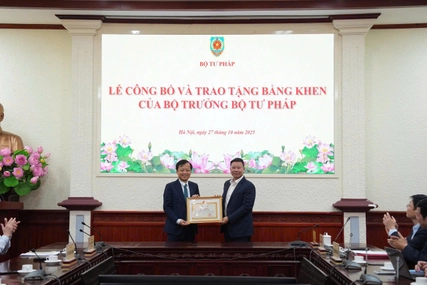
On October 27, 2025, the Ministry of Justice presented the Minister’s Commendation to organizations and individuals who have outstanding and exemplary achievements, and are leading the emulation movement of the justice sector in 2025. Among them, LuatVietnam was honored to receive the Commendation in both collective and individual categories.
As Vietnam prepares to establish International Financial Centers in Ho Chi Minh City and Da Nang, domestic enterprises will have greater opportunities to access large capital sources and participate more deeply in the global financial market. However, alongside these opportunities come significant risks, especially in lending and borrowing activities.
The first-ever draft Law on Artificial Intelligence (AI) has been unveiled to establish a comprehensive legal framework, promote innovation, and ensure responsible development and use of AI technologies in Vietnam.
In the context of increasingly vibrant tourism development in Vietnam, resort investment is becoming one of the fields attracting great attention from both domestic and foreign investors. This article provides detailed information on the legal framework and necessary requirements for resort investment in Vietnam in 2025.
Under Article 2 of Government Decree 168/2024/ND-CP on administrative sanctions against violations in the field of traffic order and safety, foreigners in Vietnam are subject to the same penalties as Vietnamese citizens when breaking traffic rules.
As the first nation in the world to enact a law on digital technology industry, Vietnam affirms its determination to build a proactive legal framework, foster the robust growth of domestic technology enterprises, promote deeper international integration, and position itself more firmly in the global technology value chain.
In the context of increasing cross-border marriages in Vietnam, prenuptial agreements are becoming an important legal tool to clearly define property arrangements and protect the lawful interests of the parties in the event of divorce or dispute. For couples in which one or both parties are foreign nationals or have assets or residence in multiple jurisdictions, entering into a prenuptial agreement prior to marriage in Vietnam serves as a necessary mechanism to mitigate cross-border legal risks.
Article 2 of the 2019 Law on Securities, revised in 2025, provides that both Vietnamese and foreign organizations and individuals are allowed to invest in and operate on Vietnam’s securities market.
According to the Law on Employment 2025, enterprises and workers must register information on the national database, including social insurance information from January 1, 2026.
A summary of information about the business sectors and trades eligible for enterprise income tax incentives and the principles of application under the latest Law on Enterprise Income Tax.
Many workers may still wonder whether they are required to participate in unemployment insurance when they already have a job and what the participation is for. Below are the subjects required to participate in unemployment insurance.
The National Assembly has passed the Law on Enterprise Income Tax, taking effect on October 1, 2025, and applying from the 2025 enterprise income tax period onward. Below are the new points of the Law on Enterprise Income Tax 2025.
This article provides the latest regulations on taxable enterprise income under the Law on Enterprise Income Tax No. 67/2025/QH15, effective October 1, 2025, and applicable from the 2025 tax year.
The year 2025 marks a transformative period for Vietnam’s financial market, characterized by deeper integration with international standards, particularly in asset management and investment. Fund management companies—key intermediaries in capital mobilization and allocation—are increasingly subject to rigorous state supervision to ensure transparency, systemic safety, and investor protection.
This article provides information on conditions for the application of corporate income tax incentives under the Law on Corporate Income Tax No. 67/2025/QH15, effective as of October 1, 2025, and applicable from the 2025 corporate income tax period.

 Vietnamese











![[Update now] Personal income tax policies 2026: 05 major changes](https://image3.luatvietnam.vn/uploaded/500x285twebp/images/original/2026/02/25/update-now-personal-income-tax-policies-2026-five-major-changes_2502135544.jpg)