Published monthly in English by Vietnam News Agency, since September 1994, Vietnam Law & Legal Forum magazine has been a reliable friend of those who wish to inquire into Vietnamese laws and policies.
Hanoi is establishing an inter-agency mechanism to coordinate greenhouse gas inventories, emissions reduction, and participation in the carbon market, with departments assigned specific tasks in emissions data, carbon-credit projects, financial management, technology, and benefit-sharing mechanisms.
As competition for global capital increasingly hinges on institutional quality and administrative reform, the Ministry of Finance is proposing measures to ease market access for foreign investors, broaden the application of special investment procedures, and remove legal obstacles facing projects that use sea areas assigned by the State.
The Government has recently introduced a number of incentives and support measures to promote domestic electrical equipment manufacture, advance technological development and increase the capacity of Vietnamese enterprises operating in the electricity sector, with the aim of ensuring national energy security.
The Government has issued Decree 349/2026/ND-CP, amending and supplementing several provisions of decrees guiding the Law on Bidding on contractor selection, with a focus on accelerating digitalisation and improving transparency in procurement activities.
As ring roads, metro lines and airport connectivity infrastructure are gradually completed in the coming years, demand for housing, industrial property, retail space and hotels is expected to expand beyond traditional urban centres.
On September 14, 2026, the Minister of Finance issued the Circular No. 136/2026/TT-BTC on amending and supplementing Clause 2, Article 3 of the Minister of Finance's Circular No. 158/2025/TT-BTC on excise tax
Crypto-asset service providers would be required to submit audited reports on client assets to the State Securities Commission twice a year, by July 31 and January 31, under a Ministry of Finance draft circular on reporting and information disclosure for the pilot crypto-asset market.
Vietnam plans to connect its national digital identification application VNeID with the electronic identification systems of Singapore and Laos, with a view to expanding the connection to other ASEAN countries.
Under the draft Law, the Government will periodically adjust market access restrictions for foreign investors based on socio-economic conditions and management requirements. This approach could shorten policy lags amid rapid changes in international capital flows, technology and supply chains, while Vietnam is shifting its investment attraction focus from quantity to quality and efficiency.
Amid the rapid growth of the online gaming market, the Ministry of Culture, Sports and Tourism is proposing amendments to Government Decree 147 of 2024 to create a more favourable regulatory framework for the development of this specialised cultural industry.
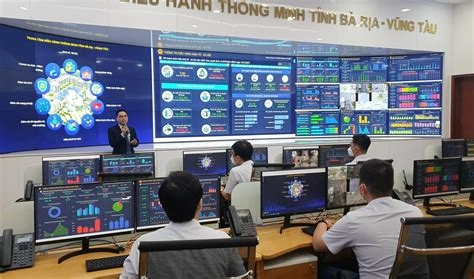
The Government has recently introduced significant changes for entities providing data-related products and services, including new notification and reporting obligations and removal of several market-entry requirements.
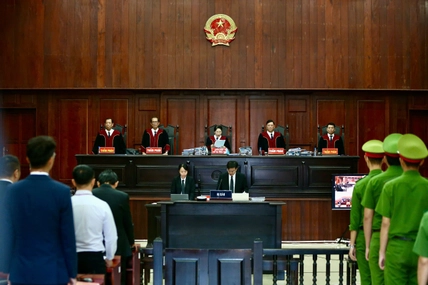
National Assembly Resolution 205/2025/QH15 has introduced a new legal mechanism allowing People’s Procuracies to initiate civil lawsuits in the public interest, including cases aimed at protecting the rights of vulnerable groups.
The challenge is to develop specific and effective solutions to ensure that all citizens have the capacity to use and benefit from the digital transformation process.
The Government on September 1 issued a decree detailing a number of articles of, and measures to implement, the Law on Cybersecurity regarding civil cryptographic products and services; conditions for dealing in civil cryptographic products and services and the export and import of civil cryptographic products.
The draft circular seeks to strengthen consumer protection in cyberspace by tightening oversight of major digital platforms, standardising procedures for recalling defective goods and improving transparency in consumer contracts.

 Vietnamese