HARLEY MILLER is a licensed law firm providing comprehensive legal services to businesses, backed by over 70 years of combined experience from our lawyers and counsels in:
Practice areas: Wills and Estates, Contracts, Commercial Law, Finance, Tax, Intellectual Property, and Company Law
Industries served: Manufacturing, Services, Aviation, Transportation, Technology, and Finance
Mission
We guide our clients through all aspects of their transactions, from internal legal matters to external commercial affairs.
Vision
To be the premier legal advocate for businesses.
To deliver tailored, effective solutions that enhance our clients' business operations.
To consistently exceed client expectations with our exceptional legal services.
Outward investment from Vietnam has a specific nature, directly impacting national financial security, foreign exchange reserves, and macroeconomic development orientation. To ensure consistency and compatibility with the new provisions of the current Law on Investment
In recent years, along with the strong growth of the economy and the increasing demand for loans, credit activities in Vietnam have expanded both in scale and scope. However, accompanying this development is the reality that disputes over credit contracts have become increasingly common, not only rising sharply in number but also becoming more complex in nature and extent.
Vietnam is shaping strategic steps to become a destination for global capital flows, most notably with the plan to establish international financial centers in Ho Chi Minh City and Da Nang. As the doors of integration open wider, domestic enterprises will have opportunities to access large-scale investment projects, but at the same time must also face more sophisticated legal risks.
The strong development of international exchanges has made civil relations with foreign elements increasingly common in Vietnam. Among them, inheritance is a particularly complex field, as it not only relates to property rights and personal rights but is also simultaneously governed by multiple legal systems. Therefore, a comprehensive study of the inheritance estate of foreigners in Vietnam is not only of theoretical significance but also of practical value, helping to ensure the legitimate rights and interests of the parties
As Vietnam prepares to establish International Financial Centers in Ho Chi Minh City and Da Nang, domestic enterprises will have greater opportunities to access large capital sources and participate more deeply in the global financial market. However, alongside these opportunities come significant risks, especially in lending and borrowing activities.
In the context of increasing cross-border marriages in Vietnam, prenuptial agreements are becoming an important legal tool to clearly define property arrangements and protect the lawful interests of the parties in the event of divorce or dispute. For couples in which one or both parties are foreign nationals or have assets or residence in multiple jurisdictions, entering into a prenuptial agreement prior to marriage in Vietnam serves as a necessary mechanism to mitigate cross-border legal risks.
The year 2025 marks a transformative period for Vietnam’s financial market, characterized by deeper integration with international standards, particularly in asset management and investment. Fund management companies—key intermediaries in capital mobilization and allocation—are increasingly subject to rigorous state supervision to ensure transparency, systemic safety, and investor protection.
In recent years, Vietnam has become an attractive destination for foreign investors and professionals seeking long-term residency. The Investor Visa Program is an important pathway for qualified individuals to settle in Vietnam. This comprehensive guide will help you understand the initial validity period, renewal procedures and key considerations for Visa holders in Vietnam.
In the context of rising bad debts in banks, the Enforcement of security interests plays a crucial role in resolving outstanding debts and ensuring the stability of the banking financial system.
Vietnam’s Golden Visa program is strategically designed to attract foreign investors and skilled professionals to live and work long‑term in Vietnam. By offering extended residency rights and access to many privileges akin to those of citizens, this program aims not only to draw in direct investment capital but also to leverage expertise and technical skills for domestic economic and technological development. For Golden Visa holders, understanding the conditions for maintaining their residency status—including the renewal process—is crucial to ensure legal compliance while maximizing benefits in terms of residency rights, business opportunities, and long‑term integration in Vietnam.
Vietnam is emerging as one of the leading countries in Southeast Asia in the field of renewable energy, particularly offshore wind power. With a total estimated potential exceeding 1,000 GW according to studies by the World Bank and the Vietnam Administration of Seas and Islands (2023), Vietnam's offshore wind power market is considered one of the most promising in Asia.
The Law on Vietnamese Nationality has undergone several major revisions since its initial enactment. The most recent version was amended in 2008 and supplemented in 2014, forming a comprehensive legal framework on nationality matters.
Living, working, or investing in Vietnam requires foreigners to understand and comply with the applicable legal regulations. The Vietnamese legal system differs significantly from international law in many areas, particularly in matters of family and marriage, property ownership, administrative procedures, and business activities.
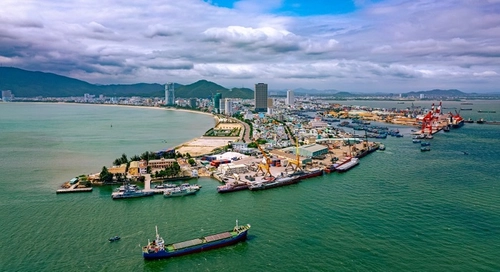
Vietnam's seaport sector has emerged as a crucial pillar of the nation's economic development strategy, offering compelling investment opportunities for both domestic and international stakeholders. As the country continues to position itself as a key player in global maritime trade, understanding the comprehensive framework of investment incentives becomes essential for potential investors.
In recent years, Vietnam's rapid maritime sector growth has brought environmental challenges to the forefront of industry concerns. As seaports continue to expand their operations, implementing effective environmental compliance measures has become crucial for sustainable development and regulatory adherence.

 Vietnamese