Identifying and declaring information on beneficial owners is an important obligation of enterprises under the law. What is the latest prescribed order for declaring beneficial owners of enterprises in 2026?
How does Circular No. 118/2026/TT-BTC regulate the application of International Accounting Standards in Vietnam? Which enterprises may choose to apply these Standards, and what principles must they follow?
The Urban Development Law is expected to unlock resources and enable Vietnamese cities to develop on the basis of productivity, technology and regional connectivity and become new growth poles of the economy.
A number of new Decrees officially take effect from October 1, 2026, directly affecting various areas. Below is a list of Decrees taking effect in October 2026.
A roundup of key new policies and regulations taking effect in October 2026, covering banking, social policies, taxation, investment, and other areas of interest to individuals and businesses.
The 2026 amended Law on Vietnamese Guest Workers has amended and supplemented various regulations on worker source preparation, training fees, recruitment, contracts, licenses, and responsibilities of enterprises providing the service of sending Vietnamese workers abroad as guest workers.
Circular No. 48/2026/TT-BCT introduces a number of new regulations on procedures for importing goods under tariff quotas, covering dossiers, procedures, and the confirmation of tariff quotas for traders.
Bearing the expectation of modernising the national education system, three major laws concerning education are likely to remove long-standing bottlenecks and lay a sustainable policy foundation for the country’s long-term development.
When investing in Vietnam, choosing the appropriate type of enterprise is one of the key legal decisions to be made from the early stages of an investment project. Each type of enterprise differs in terms of its organizational structure, liability regime, capital mobilization capacity, and flexibility in corporate governance. Therefore, investors should carefully consider the model that is most suitable for the scale of the project, the number of members, and their long-term development orientation.
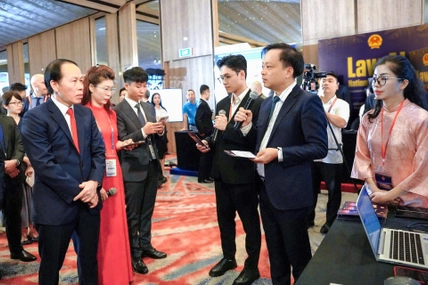
On August 18, 2026, LuatVietnam brought and introduced Law AI at the ASEAN Law Forum 2026 – an event bringing together representatives of ASEAN justice authorities, international organizations, experts, and technology companies, with a focus on the application of artificial intelligence in law-making and law implementation.
The 2025 E-Commerce Law establishes a unified legal framework for e-commerce in Vietnam, with clearer rules governing foreign platforms, overseas sellers, transaction data and foreign investment in major digital marketplaces.

 Vietnamese